Home / Intelligent Lighting / Lighting Controls
More atmosphere.
Less on the wall.
A wall can be quiet, too.
A line of separate dimmers, curtain switches and room controls asks the interior to work around the technology.
We bring connected functions to a purposeful room control. A scene gathers the lighting layers together. Presence and daylight handle the routine. The wall remains composed, and you remain in control.
Controls are planned per room and location, with access and everyday use considered from the start.
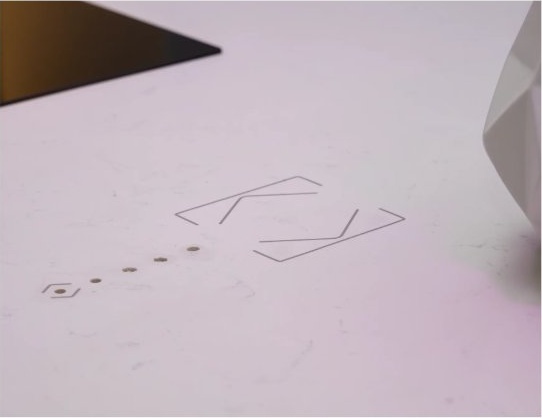
Oliver’s house — control markings within the kitchen surface.
Three ways to keep it simple.
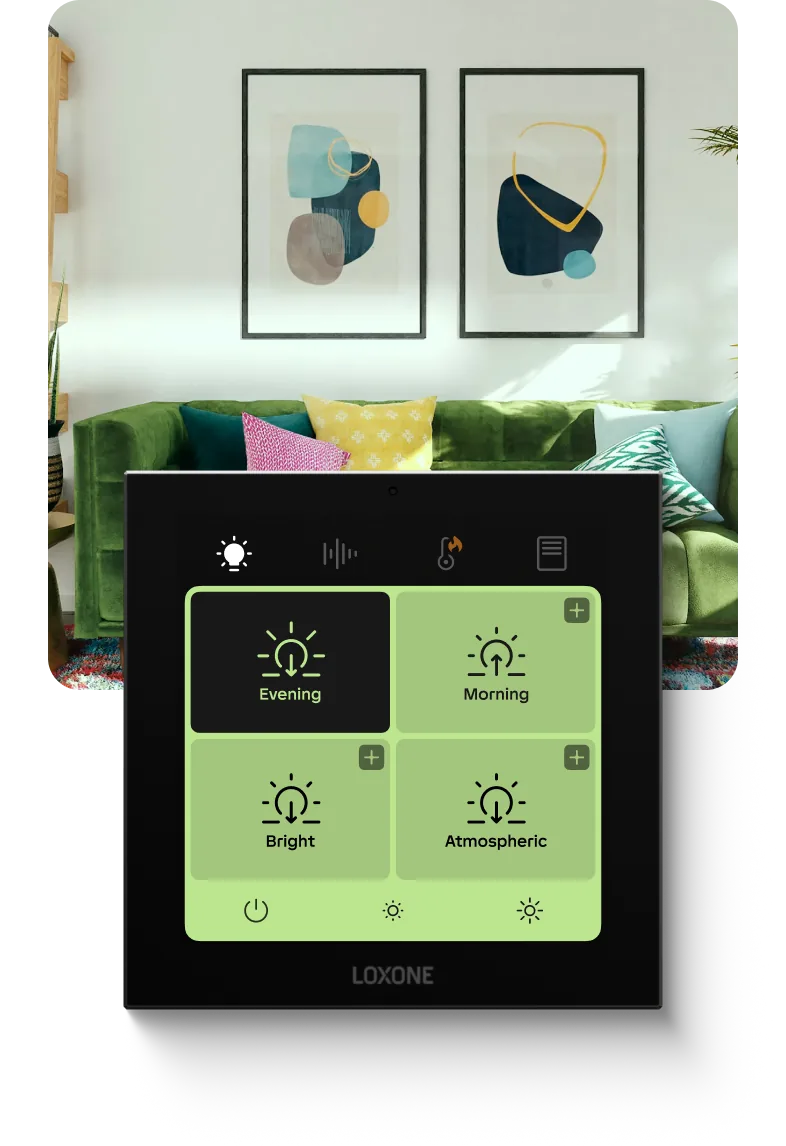
Touch Pure Display
Select a lighting scene and adjust brightness, with connected shading, audio and room comfort available at the same control. A useful choice where visual feedback makes everyday operation simpler.
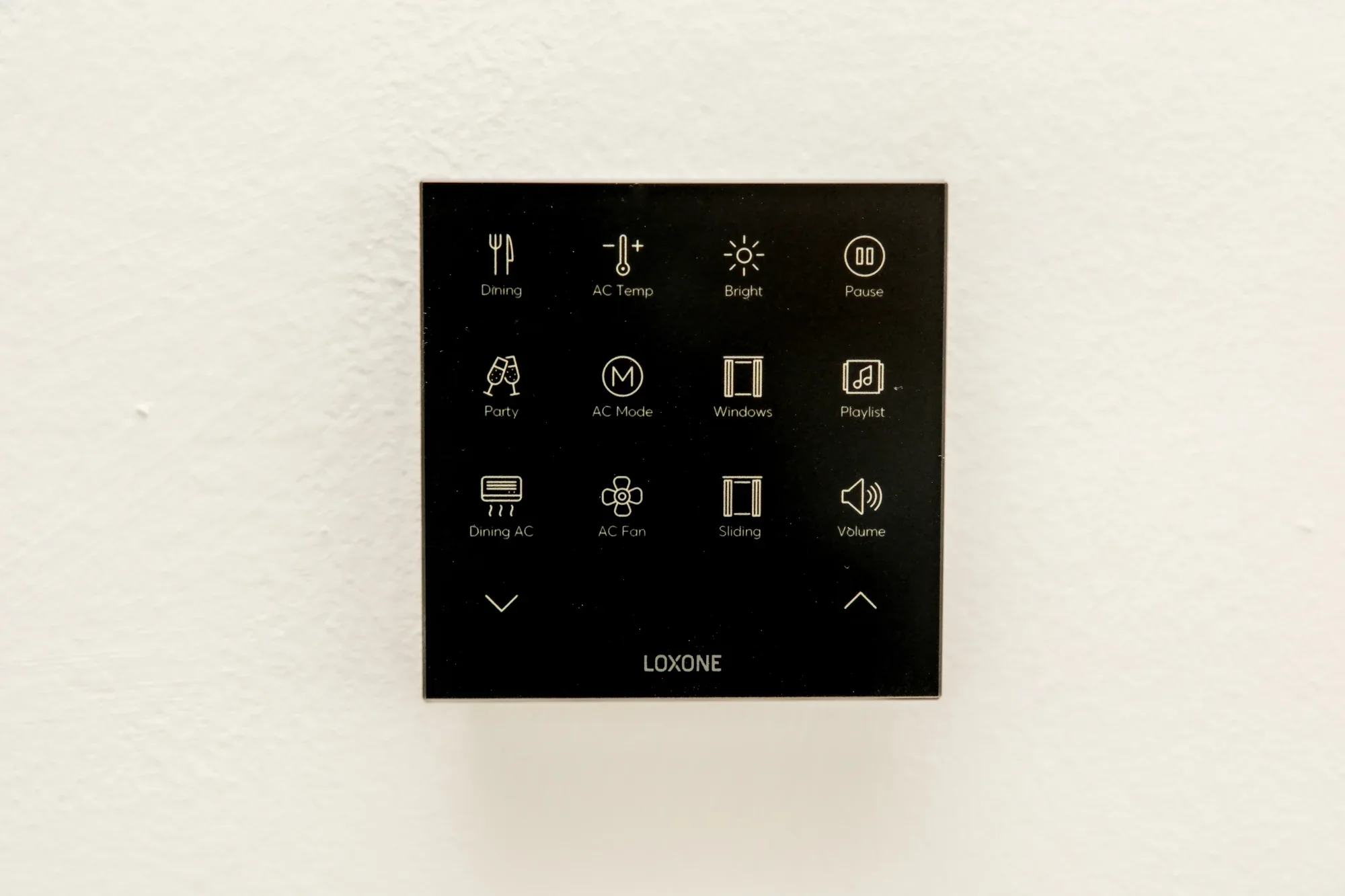
Touch Pure Flex
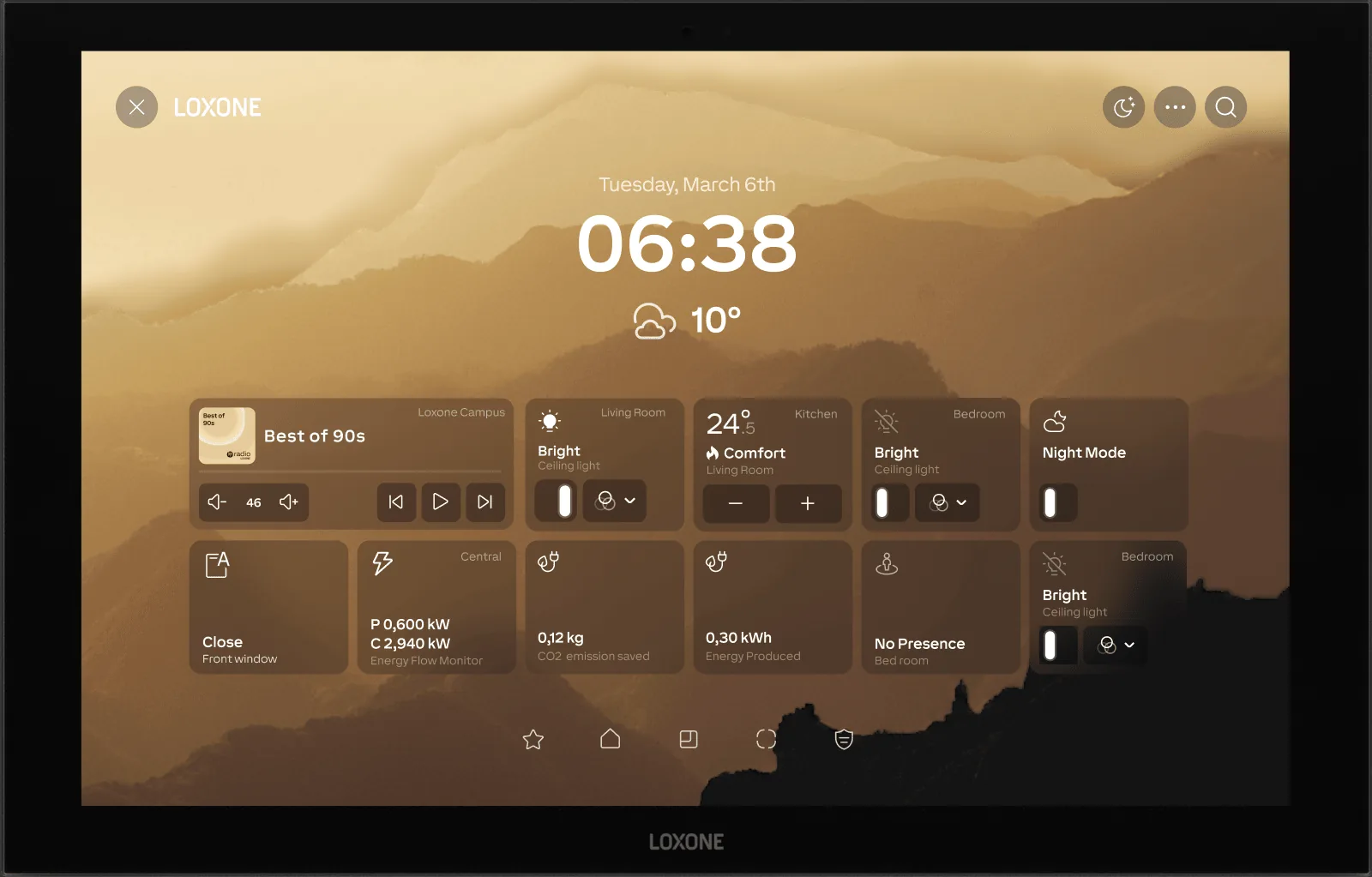
Wall Display 10″
Touch Pure Flex installation: Oliver’s house. Touch Pure Display and Wall Display images: Loxone manufacturer references. Final product specification is confirmed for the project.
One room. Many ways to feel.
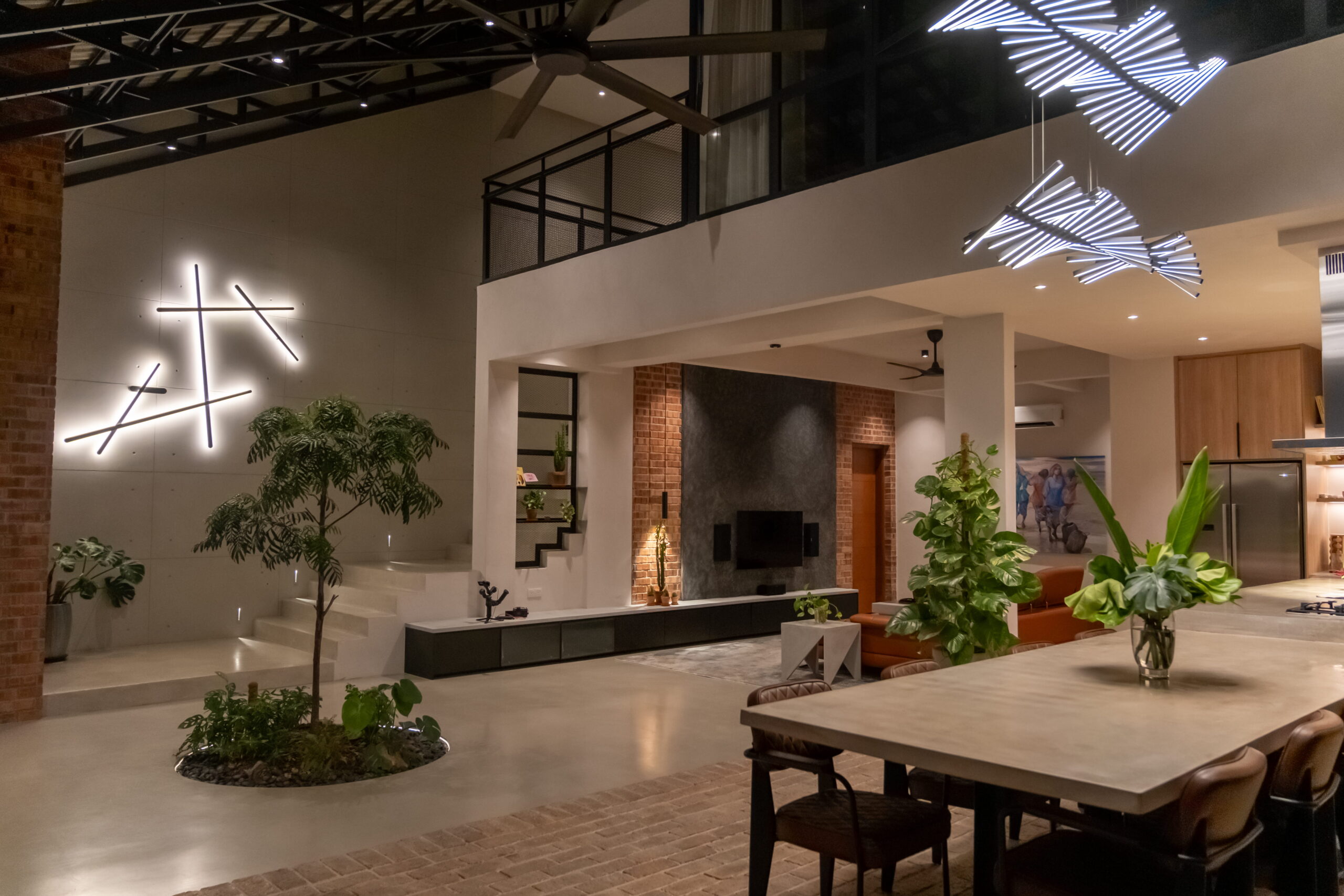
Sebastian’s house — architectural reference. The photograph stays unchanged while the scene description changes.
A warm welcome.
Downlights
Soft welcome
Connected moment: curtains and room climate can return to your chosen arrival setting.
Let the evening settle.
The ceiling recedes. Light gathers around the sofa and along the edges of the room, leaving space for conversation.
Downlights
Low
Soft
Warm/Focus
Connected moment: curtains close and a preferred audio source can join the scene.
The table takes its place.
A pool of light draws attention to the table. The surrounding layers soften, keeping faces and materials beautifully present.
Downlights
Low
Connected moment: dining-room shading and audio can follow the same selection.
Make room for the story.
Light around the screen fades. A restrained perimeter glow keeps the room comfortable as the film begins.
Downlights
Off
Connected moment: suitable shading closes. Cinema equipment integration is included where specified.
Just enough to find your way.
A quiet route through the home. Presence can bring on low-level path lighting while the main room lighting remains off.
Downlights
Off
Off
Off
Connected moment: night behaviour follows the room and time, with a physical control available when needed.
Clarity, when it is needed.
Useful layers rise together so surfaces and corners are easy to see. One selection brings the room back to its everyday scene.
Downlights
Bright
Bright
On
Connected moment: night behaviour follows the room and time, with a physical control available when needed.
Illustrative scene compositions. The photograph is an atmosphere reference and stays unchanged. Fixture capability, brightness, timing and connected actions are tailored during commissioning.
Read all six scene ideas
Arrival
The entrance is gently lit. The living room comes into view, with enough light to settle in comfortably.
Unwind
The ceiling recedes. Light gathers around the sofa and along the edges of the room, leaving space for conversation.
Dining
A pool of light draws attention to the table. The surrounding layers soften, keeping faces and materials beautifully present.
Cinema
Light around the screen fades. A restrained perimeter glow keeps the room comfortable as the film begins.
Night
A quiet route through the home. Presence can bring on low-level path lighting while the main room lighting remains off.
Cleaning
Useful layers rise together so surfaces and corners are easy to see. One selection brings the room back to its everyday scene.
The right control
for the right light.
The driver powers the LED.
The control sets its behaviour.
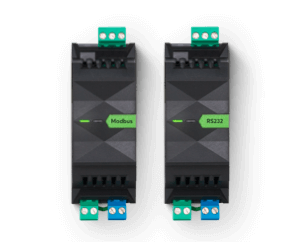
Suitable constant-voltage lights or strips, including appropriate 24 V loads. Check load, power supply and PWM compatibility. Loxone details ↗
Selected mains-input fittings. Match the driver, edge type and circuit load. Often called “TRIAC dimming”; trailing-edge operation is a distinct method. Loxone details ↗
Architectural DALI lighting, including suitable XAL ranges. Up to 64 devices and 16 groups per extension; features follow the driver and hardware version. Loxone details ↗
Compatible 0–10 V drivers. Verify signal compatibility and off behaviour; some arrangements need separate switching. 0–10 V and 1–10 V are not automatically interchangeable. Loxone details ↗
Colour, feature or effect lighting where DMX suits the design. Channel mapping and driver selection determine what each scene can do. Loxone details ↗
| Control route | What it does | Where it fits |
|---|---|---|
| Native Tree luminaire | 24 V power supplies the fitting; Tree carries the commands. Its onboard electronics control the light output. | Selected Loxone and Wever & Ducré Tree fittings. No separate external RGBW dimmer for basic dimming. |
| RGBW Dimmer TreePWM · low-voltage LED loads | Switches its low-voltage outputs rapidly to regulate compatible LED loads. Four channels can serve RGBW or separately configured lighting channels. | Suitable constant-voltage lights or strips, including appropriate 24 V loads. Check load, power supply and PWM compatibility. Loxone details ↗ |
| Dimmer ExtensionMains phase-cut | Controls suitable mains lamps or dimmable LED drivers using leading-edge or trailing-edge phase-cut dimming. | Selected mains-input fittings. Match the driver, edge type and circuit load. Often called “TRIAC dimming”; trailing-edge operation is a distinct method. Loxone details ↗ |
| DALI ExtensionDigital lighting interface | Sends addressed control commands to compatible DALI drivers. Luminaire power is supplied separately from the DALI control bus. | Architectural DALI lighting, including suitable XAL ranges. Up to 64 devices and 16 groups per extension; features follow the driver and hardware version. Loxone details ↗ |
| AO Extension0–10 V analogue control | Provides an analogue control signal to a matching driver. It does not provide the LED’s operating power. | Compatible 0–10 V drivers. Verify signal compatibility and off behaviour; some arrangements need separate switching. 0–10 V and 1–10 V are not automatically interchangeable. Loxone details ↗ |
| DMX ExtensionMulti-channel control | Sends channel values to compatible DMX drivers or luminaires. The connected equipment requires its own appropriate power supply. | Colour, feature or effect lighting where DMX suits the design. Channel mapping and driver selection determine what each scene can do. Loxone details ↗ |
Grapes’ own 24 V range is specified by its actual electrical and dimming requirements. A 24 V label alone does not establish Tree support or compatibility with a PWM dimmer.
Sense. Compose. Respond.
Sense
Compose
Respond
Useful, even when you
never touch a switch.
Presence & daylight
A gentler transition
Away & night
The atmosphere
is in the details.
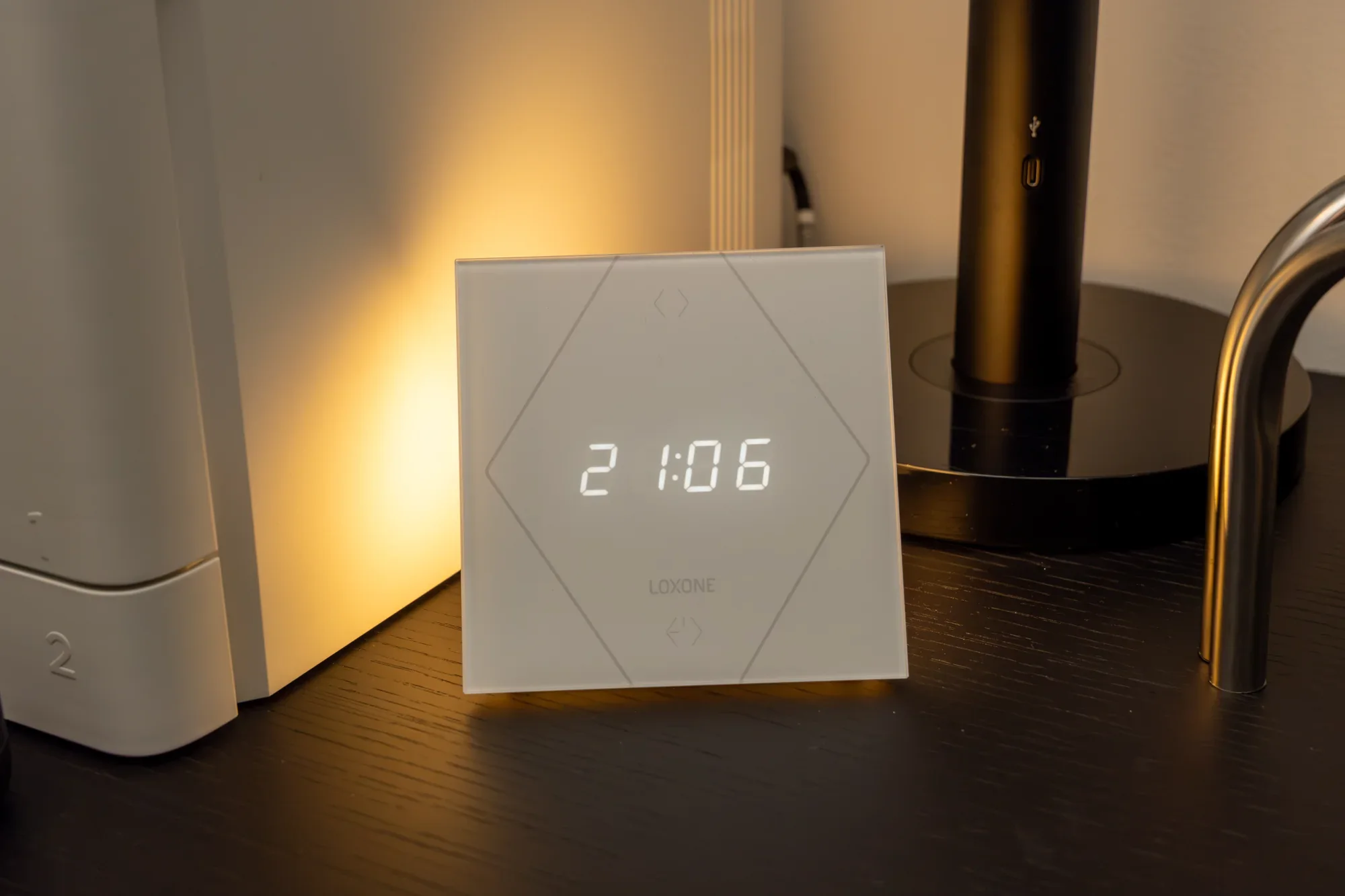
Oliver’s house — bedside control in warm light.
Does one control mean one switch for the entire house?
We mean a considered control point for a room or location. Everyday automation handles routine changes; the wall control gives a simple way to select scenes and adjust the functions assigned to it. The number and position of controls follow the layout.
Do I need my phone to change the lights?
No. Physical wall controls and commissioned automation provide everyday operation. The Loxone app offers an additional way to view and adjust the system.
Does a native Tree light need an RGBW Dimmer Tree?
Not for its basic dimming. A native Tree light has its own compatible control electronics. The RGBW Dimmer Tree is for suitable external low-voltage LED loads, such as supported 24 V strips and fittings.
Can Tree, DALI and phase-cut lights share one scene?
Yes, when each is connected through the correct interface and supports the requested behaviour. The Miniserver coordinates the scene; the chosen fixture and driver determine how that light responds.
Will dimming be smooth all the way to off?
The result depends on the fixture and driver combination, its supported dimming range and commissioning. We assess low-level stability, transition behaviour and off-state performance for the specification.
Will the lighting work without internet?
Core local lighting automation and local wall controls work without a cloud connection, provided the system has power and the required local connections. Remote access and online services have separate connectivity requirements.